Blog
How to Choose the Right Fast Charger for Your Smartphone

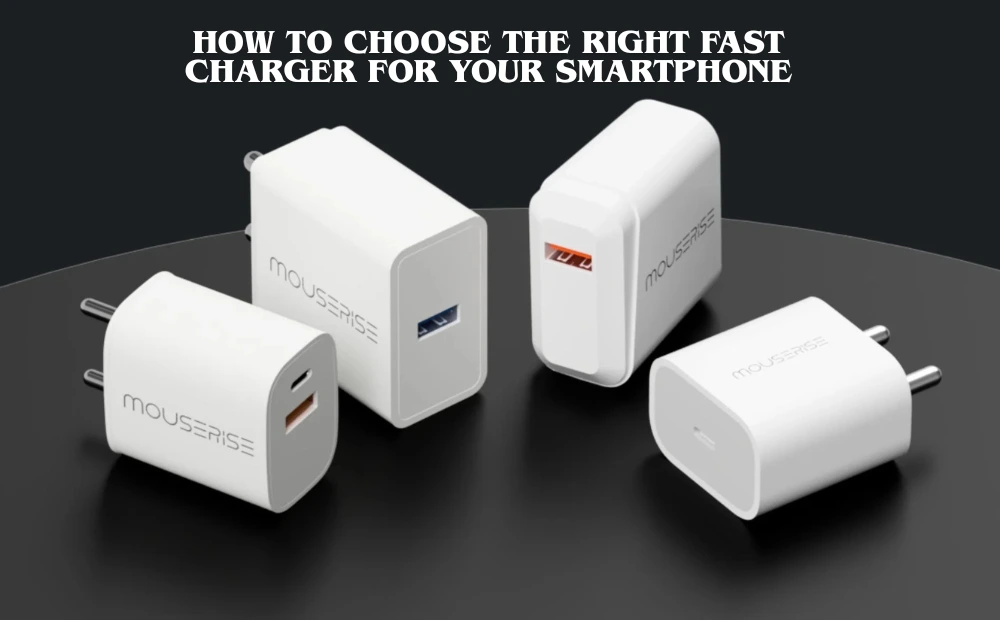
Your smartphone is an essential part of everyday life, so waiting hours for it to charge can be frustrating. Whether you’re heading to work, going to university, travelling, or simply running low on battery before an important call, a fast charger can make a big difference.
But choosing the right fast charger isn’t simply about buying the charger with the highest wattage. Your smartphone, charging cable, charging protocol, and adapter all need to work together for you to get the best performance.
If you’re looking for mobile chargers in Pakistan, this guide will help you understand what to look for before making a purchase.
What Is a Fast Charger?
A fast charger is a charging adapter designed to deliver more power to a compatible device in less time than a standard low-power charger.
Fast charging is commonly measured in watts (W). You may see chargers rated at:
- 18W
- 20W
- 25W
- 33W
- 44W
- 45W
- 65W
- 67W
- 120W or higher
However, a higher wattage doesn’t automatically mean your phone will charge faster. Your smartphone has a maximum supported charging speed, and it controls how much power it accepts.
For example, connecting a phone that supports 25W charging to a 65W charger doesn’t necessarily make the phone charge at 65W.
1. Check Your Smartphone’s Charging Speed
The first and most important step is to find out how fast your phone can charge.
Different brands and models support different charging technologies. For example, one smartphone may support 18W charging while another may support 33W, 45W, or higher.
Before buying a charger, check:
Your phone’s maximum charging wattage + supported charging technology.
This prevents you from spending extra money on a charger that your device cannot fully utilize.
2. Understand Charger Wattage
Wattage tells you the maximum power output a charger can provide.
Here’s a simple overview:
18W Chargers
18W chargers are suitable for smartphones that support basic fast charging. They can be a practical option for everyday charging at home or in the office.
25W Chargers
25W charging provides a useful balance between speed and everyday convenience and is suitable for compatible smartphones.
33W Chargers
A 33W fast charger can be an excellent choice for compatible Android smartphones. It provides faster charging while remaining practical for daily use.
44W–45W Chargers
These chargers are designed for smartphones that support higher charging speeds and can provide faster battery top-ups.
65W+ Chargers
High-wattage chargers can be useful for people who want to charge multiple compatible devices, including smartphones, tablets, and some laptops.
Remember: Always match the charger’s capabilities with your device’s requirements.
3. Don’t Forget the Charging Protocol
Wattage isn’t the only specification that matters.
Fast charging relies on communication between your smartphone and charger. Different devices may support different charging standards, such as:
- USB Power Delivery (USB PD)
- Programmable Power Supply (PPS)
- Quick Charge
- Manufacturer-specific fast charging technologies
A charger may advertise a high wattage but still fail to provide your phone’s maximum charging speed if it doesn’t support the appropriate charging protocol.
That’s why compatibility matters more than wattage alone.
4. Choose the Right Charging Port
Before buying a charger, check which connector your smartphone uses.
The most common options today include:
USB Type-C
USB Type-C has become widely used across modern Android smartphones, tablets, and other electronic devices.
USB-A
USB-A is still found on many traditional charging adapters and cables.
Multi-Port Chargers
If you regularly charge multiple devices, a multi-port adapter can be convenient. It allows you to charge your phone alongside another compatible device without carrying multiple adapters.
5. Choose a Good-Quality Cable
Even if you buy a powerful fast charger, your charging speed can be affected by the cable.
For example, if your phone and adapter support high-speed charging but the cable isn’t designed to handle the required power, you may not get the expected charging performance.
When choosing a cable, consider:
- Connector type
- Supported power
- Build quality
- Charging compatibility
- Cable length
- Data-transfer capability, if required
For modern smartphones, a reliable USB Type-C cable can be an important part of a fast-charging setup.
6. Original vs Compatible Fast Chargers
When buying a charger, you’ll often find original, branded, and compatible options at different prices.
An original charger is specifically designed for the manufacturer’s devices and charging technology.
A compatible charger can also be a good option when it comes from a reliable source and clearly lists its specifications and safety features.
The important thing is to avoid choosing a charger based solely on the lowest price.
Look for:
- Clear specifications
- Reliable construction
- Appropriate safety features
- Correct output ratings
- Suitable charging standards
7. Safety Should Be a Priority
Fast charging delivers more power, so charger safety should never be overlooked.
A quality charger may include protections against:
- Overvoltage
- Overcurrent
- Overheating
- Short circuits
- Power fluctuations
Avoid suspiciously cheap chargers with unclear specifications or questionable build quality.
A few extra minutes of research can help you choose a charger that is better suited to your phone and everyday usage.
8. Consider Your Daily Charging Needs
The “best” charger depends on how you use your phone.
For Everyday Users
An 18W, 20W, 25W, or 33W charger may be enough depending on your smartphone.
For Heavy Smartphone Users
If your phone supports higher charging speeds, a 44W, 45W, 65W, or higher charger may provide more convenient battery top-ups.
For Travelers
A compact charger can be more convenient, particularly if it has multiple ports and can support several devices.
For Multiple Devices
Consider a multi-port charger that can safely power your smartphone and other compatible electronics.
9. Don’t Buy More Wattage Than You Need
It’s easy to assume that a 120W charger must be better than a 33W charger.
That’s not necessarily true.
If your smartphone supports 33W charging, buying a 120W charger won’t automatically make it charge at 120W.
Instead, focus on:
Compatibility + charging protocol + suitable cable + safety + quality.
This combination is much more important than simply choosing the largest wattage number.
10. Why Your Phone May Still Charge Slowly
Even with a fast charger, you might experience slow charging. Some common reasons include:
- Your phone doesn’t support the charger’s fast-charging technology.
- The cable doesn’t support the required power.
- The charger has insufficient output.
- The phone is overheating.
- The charging port is dirty or damaged.
- You’re using the phone heavily while charging.
- The battery is aging.
- The charger or cable is faulty.
If your phone suddenly starts charging much slower than normal, checking the charger and cable is a good starting point.
Quick Checklist Before Buying a Fast Charger
Before purchasing, ask yourself these questions:
✓ What is my phone’s maximum charging speed?
✓ Which fast-charging protocol does my phone support?
✓ Does the charger provide the required wattage?
✓ Is the charging port compatible?
✓ Does my cable support the required charging speed?
✓ Does the charger have appropriate safety protections?
✓ Is the product from a reliable seller?
If the answer to all of these is yes, you’re much more likely to get a charging setup that works efficiently with your smartphone.
Where to Buy Fast Chargers in Pakistan?
Finding the right charger is easier when you can compare different wattages, connector types, and compatibility options in one place.
Phone House PK offers a range of mobile charging accessories, including fast chargers, Type-C cables, charging adapters, and other smartphone accessories for customers in Pakistan.
Whether you’re looking for an everyday charger or a higher-power charging solution, make sure you select a product that matches your smartphone’s specifications.
Final Thoughts
Choosing the right fast charger isn’t about buying the most powerful adapter available. It’s about finding the right combination of wattage, charging technology, compatibility, cable quality, and safety.
Before making your purchase, check your smartphone’s specifications and choose a charger designed to work with its supported charging standard.
A properly matched charger can give you faster and more convenient charging while helping you avoid unnecessary spending on features your phone cannot use.